
Renovhome service
Ceiling painting — even coverage, crisp white, careful finish.
The ceiling is the first surface you notice when you look up — and the first to give away a poorly finished job. Renovhome SA treats your ceilings with the care their visibility deserves.
Your free quote, no commitment.
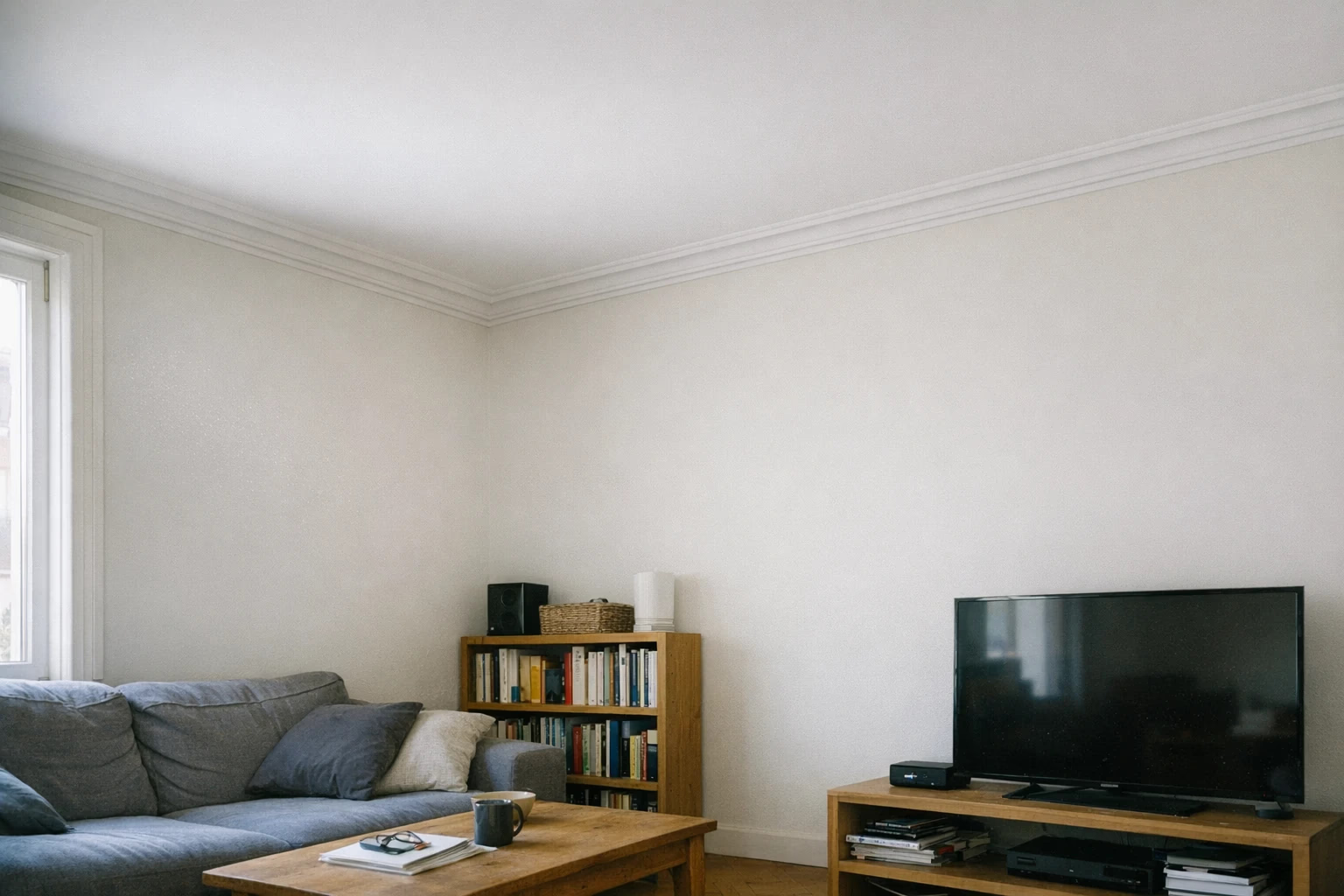
The ceiling: the first surface seen, the last one prepared
A poorly painted ceiling shows immediately: roller marks, visible joins, ripples picked out by the light. A well-painted ceiling, by contrast, disappears from view — which is exactly the effect you want.
Our ceiling protocol
- Full protection of floors and furniture — a ceiling calls for dust sheets well beyond the immediate work area.
- Inspection under raking light to spot defects invisible to the naked eye: hairline cracks, traces of old patch repairs, flaking paint.
- Filling and skimming of the identified defects.
- Treatment of structural cracks with scrim tape or bridging tape, depending on the extent.
- Stain-blocking primer where damp marks or existing water stains are present.
- Matt ceiling paint applied in two roller coats, with no splatter.
Specific cases we handle
- Ceilings with damp marks: a stain-blocking coat before painting, to keep the stains from bleeding back through.
- Ceilings after water damage: see our dedicated water-damage service.
- Old, cracked ceilings: crack bridging, targeted skimming, and two even coats.
- Ceilings with mouldings, cornices and ceiling roses: protection of the relief detail, brush application for the intricate areas.
Why a ceiling on its own may be enough
Many requests concern the ceiling only: a sign of past leakage, a coat applied fifteen years ago, yellowing from prolonged exposure. Renovhome SA takes on this kind of work even when the walls are not involved. Furniture protection is the same, and so is the finish.
What determines how long a ceiling takes?
The duration of the work depends largely on the condition of the surface and the area — and it is set out with you in the quote. The main factors:
- A sound ceiling, with no heavy preparation — protection, two coats and a final clean-up: this is the simplest case.
- A ceiling with hairline cracks to fill — the drying time of the filler adds a step before the final coat.
- A ceiling with damp marks — a stain-blocking coat is applied before painting, which adds a further step.
- A ceiling with mouldings or cornices — brush application over the relief detail, which is more painstaking.
- A full apartment ceiling — several rooms carried out in sequence, planned without interruption.
Ceiling painting in Geneva — building types
Geneva’s ceilings tell the story of the city’s building stock:
- Haussmann-era buildings in Les Eaux-Vives, Champel or Plainpalais — traditional plaster cornices, sometimes original ceiling roses, and ceiling heights often above 2.80 m. These call for a painter used to scaffolding and brush work over relief detail.
- Modernist estates in Le Lignon, Onex or Meyrin — plasterboard ceilings, standardised ceiling heights (2.40 to 2.60 m), and recurring traces of leaks in the damp service shafts of the 1960s–70s building stock.
- Recent developments (Pont-Rouge, Belle-Terre, Les Sciers) — smooth ceilings, certified eco-friendly paints, and sometimes stretched PVC ceilings that must not be treated with the same paints as plaster.
Why entrust a ceiling to a professional painter?
Ceiling painting is one of the trickiest jobs for a DIY homeowner. Three difficulties explain the gap between work done by a professional painter and a non-professional attempt:
- The light reveals everything — a defect invisible under overhead light becomes obvious under raking light (a bedside lamp, a side window). A professional painter works under raking LED light from the preparation stage onwards.
- The roller splatters — without the right roller and the right paint load, ceiling paint flicks onto the walls, the furniture and the windows. Renovhome SA uses specific drip-resistant rollers.
- The sequence of coats — a ceiling needs an undercoat (or a stain-blocking coat where there are water stains), then two finishing coats. The order, the drying time and the cross-rolling of passes all determine how even the result is.
A water stain on the ceiling — what to do?
A water stain on the ceiling points to an earlier problem (a leak, an infiltration, condensation) that may be resolved or still active. If the cause has been resolved:
- Check that the surface is dry (with a moisture meter — under 4% residual moisture).
- Scrape off any flaking paint.
- Apply a stain-blocking coat over the affected area, which seals in old stains.
- Paint with two even coats.
If the cause has not been resolved — an active leak, recurring infiltration — painting is a waste of time: the cause must be dealt with before painting. Renovhome SA can assess this during the visit and point you towards the relevant trades (plumber, waterproofing, drying-out).
Ceilings and water damage
When the ceiling is affected as part of a water-damage claim made to the insurer, the protocol is more thorough: see our water-damage repair service, which includes coordination with the drying-out work and full treatment of the room.
A treated ceiling transforms the room. The contrast between a carefully finished ceiling and the existing walls is often enough to give the whole room a fresh look. Request your quote — a prompt reply.
Content published by Renovhome SA, interior and building painting company in Geneva since 2019. Your painter in Geneva for every interior painting project.
Available in Geneva and the surrounding area
Renovhome SA carries out ceiling painting across every district of the canton of Geneva. Here are some areas where we work regularly:
- Painter Canton de Genève 1200 · 1201 · 1202 · 1203 · 1204 · 1205 · 1206 · 1207 · 1208 · 1209 · 1213 · 1214 · 1217 · 1218 · 1219 · 1220 · 1224 · 1226 · 1227 · 1228 · 1231 · 1232
- Our team in Carouge 1227
- Work in Champel 1206
- Projects in Chêne-Bougeries 1224
- Painter Cologny Renovhome 1223
- Free quote in La Servette 1202
- Painter Lancy 1212 · 1213
- Our team in Le Grand-Saconnex 1218
See all of our service areas — from Le Lignon to Champel, from Eaux-Vives to Plan-les-Ouates.
Your project
Ceiling painting — get a free quote.
A few lines are enough to get started. We call you back quickly, then you receive your free quote. A dedicated point of contact who follows your project, from measurements to handover.
Rated 5,0 out of 5 · 20 Google reviews · A free, written, detailed quote. Quick reply. Your data protected (Swiss Data Protection Act).